
Your Complete Contract-to-Close TimelineEvery
Milestone from Accepted Offer to Closing Day
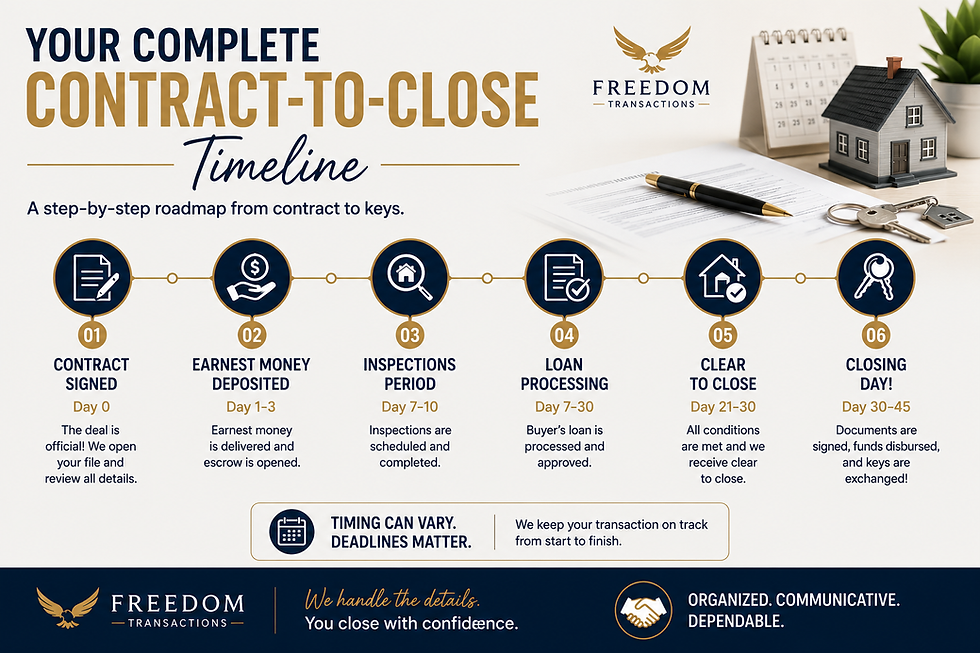
Your Complete Contract-to-Close Timeline
Buying or selling a home doesn't happen overnight. Once the purchase agreement is signed, a carefully coordinated series of milestones begins. Each step has important deadlines, required documentation, and communication between multiple parties. Here's what typically happens throughout the transaction.
Day 1: Contract Executed
The transaction officially begins when all parties have signed the purchase agreement. At this point the contract becomes legally binding, and the timeline starts. This is when your transaction coordinator carefully reviewes the contract to identify critical dates, contingencies, financing terms, inpsection deadlines, and any special provisions that will require attention throughout the transaction.
Key Tasks
Verify all signatures and dates
Review contract terms
Identify all contractual deadlines
Create the transaction file
Begin Transaction tracking
Day 2: Escrow Opened
The executed contract is sent to the title or escrow company to officially open the transaction. Earnest money instructions are provided to the buyer, and escrow begins collecting the documents necessary to facilitate the closing. Opening escrow promptly helps prevent delays later in the process.
Key Tasks
Open escrow with the title company
Deliver earnest money instructions
Introduce all parties
Confirm buyer and seller information
Begin title work.
Days : 3–10: Inspection Period
During the inspection period, the buyer conducts inspections to evaluate the property's condition. Depending on the contract, this may include general home inspections, pest inspections, septic inspections, well testing, roof inspections, and other spcialty evaluations. If issues are discovered, repair requests or negotiations may take place before the inspection contingency expires.
Key Tasks
Schedule inspections
Monitor inspection deadlines
Coordinate access to the property
Track repair requests
Ensure contingency deadlines are met
Days: 5-20 Loan Processing
The lender begins processing the buyers loan application. During this phase, the buyer may be asked to provide additional financial documentation while the lender verifies employment, income, assets, and credit. The loan file moves through underwriting, and any conditions issued by the underwriter must be satisfied before approval.
Key Tasks
Monitor loan progress
Follow up with the lender
Track underwriting conditions
Coordinate required documentation
Keep all parties informed
Days: 15-30 Appraisal
If financing is involved, the lender orders an appraisal to determine the property's market value. The appraiser visits the property and prepares a report that heps the lender confirm the home's value supports the loan amount. Should the appraisal come in lower than expected, additional negotiations or financing adjustments may be necessary.
Key Tasks
Confirm appraisal has been ordered
Coordinate property access
Monitor appraisal completion
Review appraisal status
Address valuation issues if necessary
Days: 20-35 Title Review
While financing is progressing, the title company researches the property's ownership history to verify that clear title can be transferred to the buyer. During this review, any liens, judgments, unpaid taxes, ownership discrepancies, or other title defects are identified and resolved before closing.
Key Tasks
Review title commitment
Resolve title issues
Verify legal ownership
Confirm tax and lien status
Coordinate with attorney's when needed
Days: 30-45 Clear-to-Close
Once the lender has approved the loan, all underwriting conditions have been satisfied, and title has confirmed the property is ready to transfer, the lender issues the coveted "Clear to Close." This milestone signals that closing can officially be scheduled and final preparations begin.
Key Tasks
Receive Clear to Close from lender
Confirm title is complete
Schedule closing appointment
Prepare final documents
Coordinate with all parties
Closing Day
Closing day is when buyers and sellers sign all required legal documents to transfer ownership of the property. Final figures are reviewed, documents are notarized, and the closing packet is completed. Although signing is a major milestone, the transaction is not officially complete until funding and recording occur.
Attend scheduled signing
Review final settlement figures
Execute closing documents
Confirm all signatures are complete
Submit documents for funding
Funding
After all signed documents have been returned and reviewed, the lender releases the loan funds to the title or escrow company. Once all monies have been received - including buyer funds, lender funds, and any additional required payments - the transaction is financially complete.
Key Tasks
Confirm receipt of lender funds
Verify buyer funds have been received
Balance final settlement statement
Prepare for recording
Recording
Recording is the final step in the transaction. The deed is officially recorded with the county, transferring ownership from the seller to the buyer. Once recording has been confirmed, the transaction is offically closed, keys can be released (if applicable) and everyone can celebrate a successful closing.
Key Tasks
Confirm deed has recorded
Notify all parties
Release keys according to contract
Deliver final documents
Close the transaction file



Comments